WaterCat 2000 F (Full)
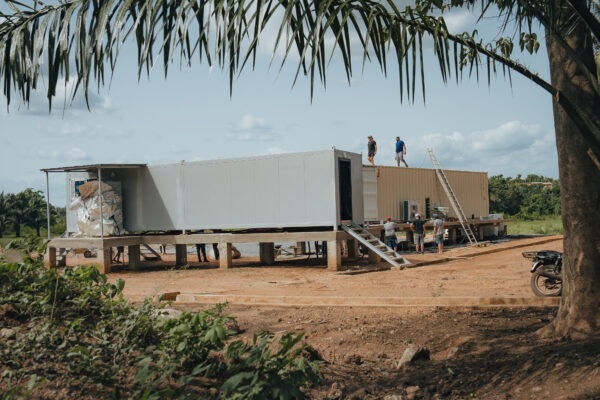
WaterCat 2000 F (full) is a modular containerized water treatment unit designed for the comprehensive treatment of heavily contaminated groundwater. The technology is designed as a robust, universal, operationally flexible, yet still simple and energy‑efficient, independent (off-grid) solution, suitable for long‑term deployment in areas with problematic raw groundwater quality.
APPLIED TECHNOLOGY
The treatment unit combines several proven water treatment stages:
- Sedimentation and removal of mechanical impurities
- Controlled aeration of raw water
- Sand filtration
- Multi-stage filtration using specialized filter media (BIRM, zeolite, activated carbon)
- Removal of gases, VOCs (volatile organic compounds), organic substances and petroleum hydrocarbons
- Partial membrane separation using reverse osmosis with bypass
- Hygienic water disinfection using UV radiation
- Water storage in a flexible storage tank
- Automatic pressure boosting station for water distribution
- Water dispensing point of the WaterBot type
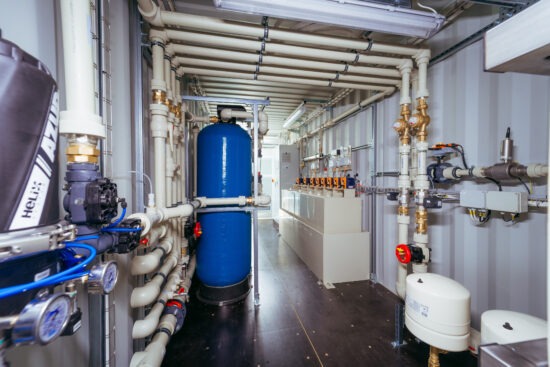
Technical Parametres
| PARAMETER | VALUE |
| Raw water inflow | 2 m³/h |
| Water treatment capacity | 1–2 m³/h depending on contamination level |
| Maximum daily production | approx. 20–40 m³ |
| Operating time | up to 20 hours per day |
| Outlet pressure | 1 bar |
| Installed electrical power input | 3.7 kW |
Water Pretreatment container
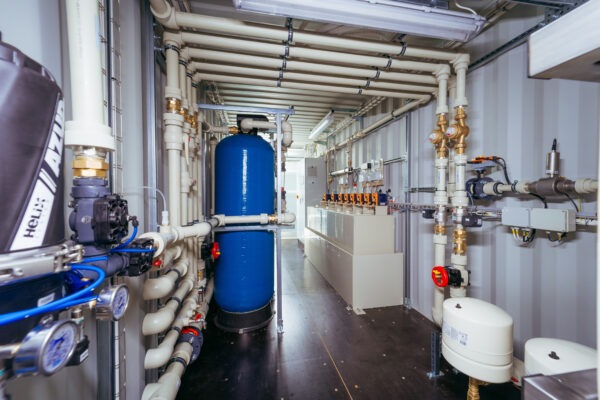
Raw water is pumped from the borehole into a settling tank, which provides sufficient retention time for the sedimentation of heavy suspended solids. The separation process is facilitated by an integrated system of internal baffles and overflow walls. In the presence of iron and manganese, the water is subjected to controlled aeration using a blower, which leads to the oxidation of these elements and their subsequent separation. From the transfer tank, the water is pumped into a sand filter, which serves for final filtration of the formed precipitates. Within this treatment stage, radon, hydrogen sulfide, methane, part of VOCs, organic substances, and heavy hydrocarbons are also removed.
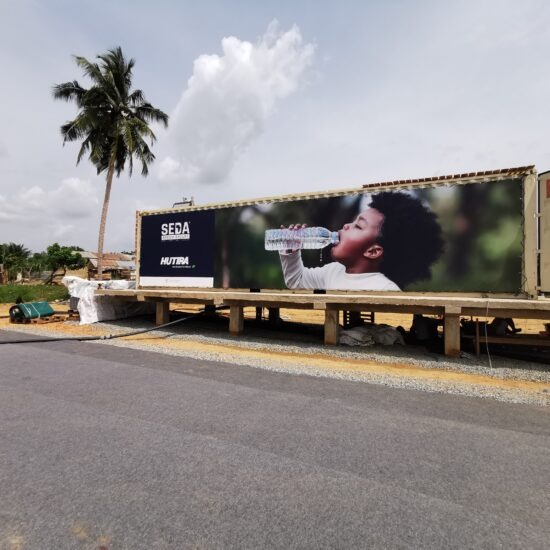
Water Treatment container
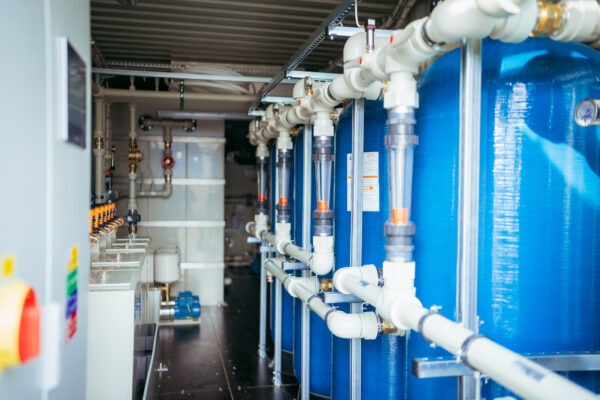
The pre-treated water then enters a multi-stage filtration system consisting of gravity-driven, non-pressurized filters with an open water surface and bottom inflow.
Active filtration media include:
- BIRM – removal of iron and manganese, partial hydrogen sulfide removal
- Zeolite – removal of ammonium ions and selected hardness components
- Activated carbon – removal of pesticides, VOCs, petroleum substances and odors
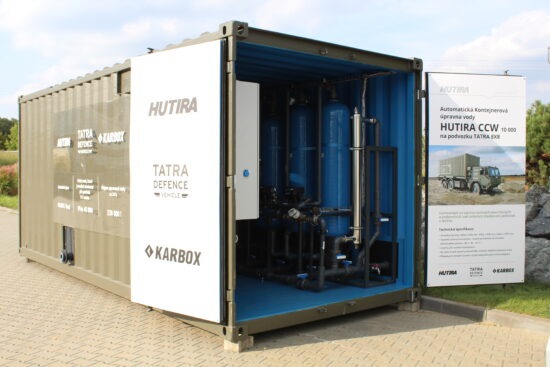
The filter media are arranged in several layers and can be selected as required according to the nature of the contamination:
- Gravel/stones with a grain size of 4–8 mm for water distribution at the bottom of the tank
- Filter sand 1–2 mm to support the active media and prevent media washout
- Active filtration media
Filter backwashing is ensured by increasing the flow rate to 1.5–2 times the operating flow rate. After opening the drain valve downstream of the tank, water is discharged to waste. The frequency and procedure of filter backwashing are described in the operating manual of the technology.
After this filtration stage, the water is collected in a transfer tank and subsequently directed either:
- through reverse osmosis (a proportional part of the flow), or
- via a bypass outside the RO system.
The reverse osmosis unit is designed for a flow rate of 250 L/h with a recovery of approximately 20 %. Both streams rejoin downstream of the reverse osmosis unit and are mixed together. The RO membrane system is protected by a cartridge filtration system, which reduces the risk of membrane fouling and enables stable operation even with highly contaminated influent water.
The treated water is then hygienically secured by passage through a UV lamp and stored in a flexible storage tank. An automatic pressure boosting station ensures a stable water supply to the distribution system and the dispensing point.
The technology is controlled by a dedicated electrical control panel. The system includes operational flow and pressure measurements, and sampling valves are installed for water quality monitoring.
RANGE OF TREATABLE CONTAMINANTION
| Parameter / Substance | Max. permissible limit in raw water | Unit |
| Iron (Fe) | < 10 | mg/l |
| Manganese (Mn) | < 5 | mg/l |
| Methane | almost complete removal | / |
| Hydrogen sulfide (H₂S) | < 2 | mg/l |
| TOC | < 5 | mg/l |
| VOC | < 10 | mg/l |
| Pesticides | < 10 | µg/l |
| NTU | < 50 | / |
| TSS | < 200 | mg/l |
| Nitrates | < 200 | mg/l |
| Chlorides | < 2000 | mg/l |
| Fluorides | < 20 | mg/l |
| Ammonium ions | < 10 | mg/l |
| Arsenic | < 200 | µg/l |
| Uranium | almost complete removal | / |
| Radium | almost complete removal | / |
| Hardness | unlimited | / |
| Bacteria and viruses | all | / |
| Organic substances | all | / |
Off-Grid Power Supply Concept
The WaterCat 2000 S unit can be operated as a fully off-grid solution, making it suitable for deployment in remote locations without access to the electrical grid.
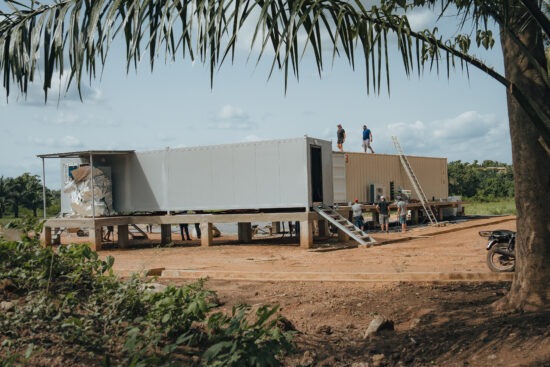
The system is designed to be powered by an integrated photovoltaic power supply with battery storage, providing autonomous operation under typical climatic conditions. The energy concept covers continuous daily operation of the treatment technology, including night-time operation, while maintaining sufficient operational reserve.
A 48 V low-voltage architecture is used, selected for its robustness, modularity, and suitability for demanding off-grid applications. The power system allows easy integration of monitoring, protection, and optional backup power sources (e.g. generator) if required by site conditions.
The off-grid energy solution is optimized for:
- Reliable autonomous operation
- High system efficiency and low operational complexity
- Suitability for harsh environmental conditions
- Simple serviceability and scalability
Final configuration of the power system may be adapted to local solar conditions, operating regime, and project-specific requirements.
Indicative Energy Balance
| Item | Value |
| Optimized power input | approx. 2.22 kW |
| Assumed operating time | 20 h/day |
| Daily energy consumption | approx. 44.4 kWh/day |
| Daily borehole pump consumption | approx. 9.1 kWh/day at 100 m total dynamic head |
| Total daily energy balance | approx. 53.5 k |
Write to us
We wouldn’t be here without you. If you have any questions or feedback, don’t hesitate to get in touch.